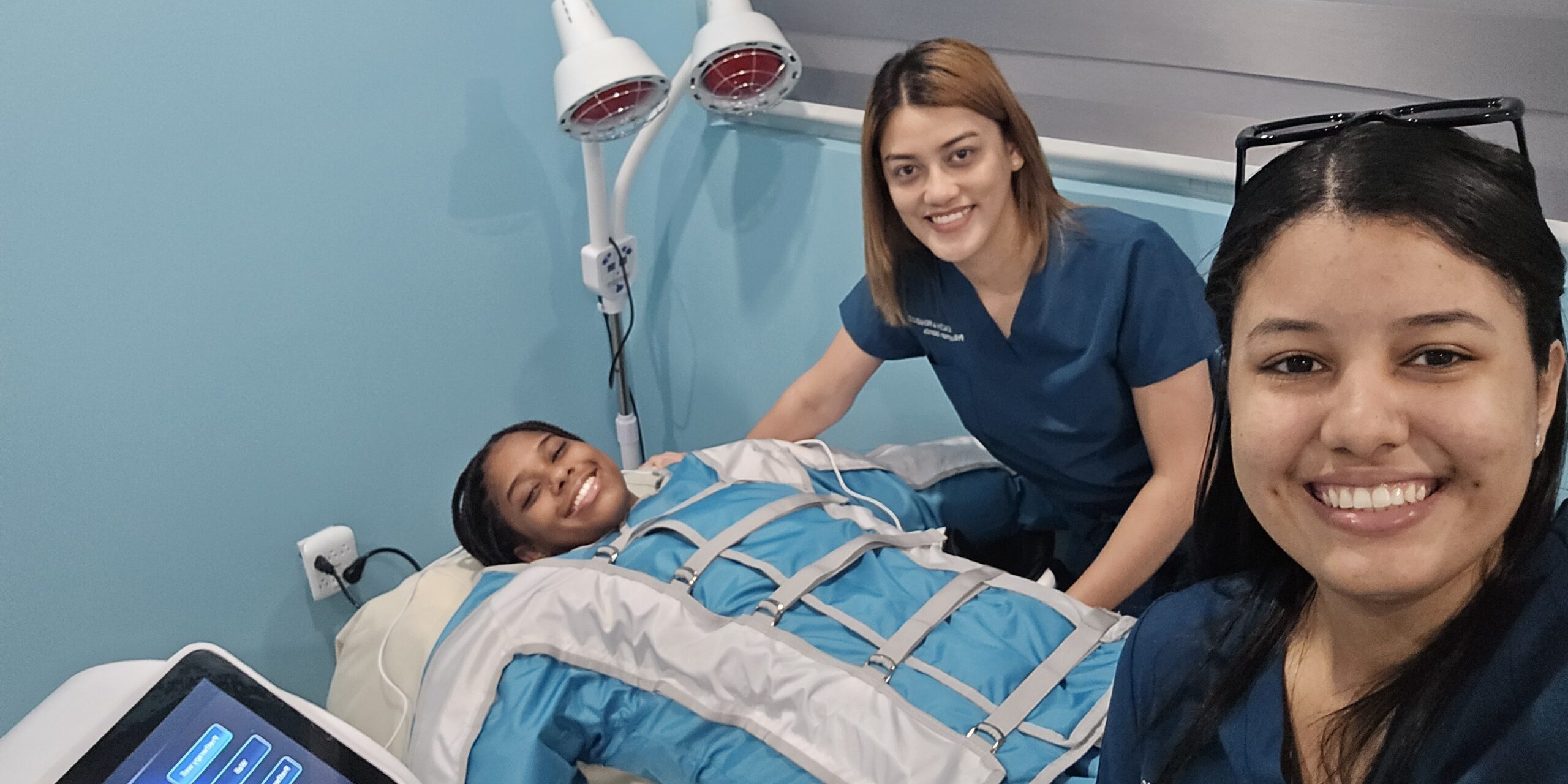
What is Pressotherapy?
A few specialist clinics, like Philanx Health and Rehab in the Cayman Islands, use advanced pressotherapy devices in patient care. What is pressotherapy, and how is it beneficial in managing patient conditions?
Pressotherapy is a non-invasive therapeutic method that uses intermittent pneumatic compression to deliver controlled, rhythmic pressure to various areas of the body (including the arms, abdomen, and the legs). During treatment, specially designed garments or air-compression suits are connected to a device that inflates and deflates in a controlled sequence. This rhythmic compression helps promote circulation and assists with the movement of fluid throughout the body.
Pressotherapy is widely offered in medical rehabilitation clinics, wellness centers, aesthetic clinics, and vascular practices. While many people use it for wellness and cosmetic purposes, research also supports its clinical applications, particularly in improving circulation, improving range of motion, and managing conditions such as edema, lymphedema, and the prevention of venous thrombosis (Hoffman et al., 2016). Subsequent studies have demonstrated that pressotherapy can significantly reduce soft tissue stiffness following eccentric training and decrease the severity of delayed onset muscle soreness (DOMS) after physical activity (Waller et al., 2006). Furthermore, Kim et al. (2024) reported its potential as an adjunctive treatment for certain medical conditions.
How Does Pressotherapy Work?
The lymphatic and circulatory systems play a vital role in maintaining fluid homeostasis and promoting fluid circulation throughout the body. The lymphatic system drains accumulated tissue fluid and waste products into the bloodstream, while the venous system carries deoxygenated blood from the extremities back to the heart.
Through controlled, intermittent compression, pressotherapy facilitates fluid movement similar to the body’s physiological muscle pump, thereby promoting lymphatic drainage and venous return. Clinical guidelines recognize pressotherapy as a treatment option for certain vascular and lymphatic conditions (Schwahn-Schreiber et al., 2018).
Evidence-Based Benefits of Pressotherapy
- Edema and lymphedema management
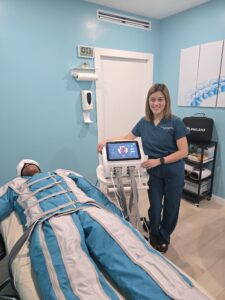
Edema and lymphedema occur when there is accumulation of fluid in the tissues that causes swelling. The rhythmic compression from pressotherapy increases tissue pressure and promotes fluid movement into the venous and lymphatic system, facilitating its return to the systemic circulation. A systematic review by Hou et al. (2024) found that intermittent pneumatic compression may provide additional benefits when used alongside conventional treatment for breast cancer-related lymphedema. Therefore, pressotherapy should be considered an adjunctive treatment for the management of edema and lymphedema rather than a replacement for standard treatment methods.
- Improved circulation
One of the physiological effects of pressotherapy is its ability to support venous return. With the inflation of the air chambers, external pressure is applied to the tissues and veins facilitating the flow of accumulated venous blood toward the heart. The alternating inflation and deflation of the chambers creates a rhythmic pressure that facilitates venous circulation and helps prevent venous stasis. This mechanism is clinically relevant because pressotherapy can be used as prophylaxis for venous thromboembolism (VTE) in appropriate patients, particularly among surgical and hospitalized patients (Kim et al., 2024).
- Support for post-exercise recovery
Delayed onset muscle soreness (DOMS) typically occurs within several hours after intense or unaccustomed exercise and may be accompanied by short-term temporary inflammatory responses, alterations in fluid balance and physiological responses in the affected muscles. Physically active individuals and athletes have increasingly adopted pressotherapy as a method to support post-exercise recovery. The rhythmic compression helps move fluids and blood back to the heart while also making muscle soreness feel less severe. A 2024 systematic review and meta-analysis on the use of lower-limb intermittent pneumatic compression examined the possible benefits for particular aspects of recovery. Although the observed effects remain limited, additional research is needed to further investigate its role in post-exercise recovery (Maia et al., 2024). Therefore, pressotherapy may be considered an adjunct to post-exercise recovery, but it should not be regarded as a replacement for essential recovery strategies such as adequate hydration, nutrition, rest, sleep, and appropriate training methods.
- Promotes muscle relaxation
Through its controlled sequential compression, pressotherapy promotes a sensation of muscle relaxation by supporting local circulation. The intermittent pressure may produce temporary changes in blood flow and tissue pressure, potentially contributing to changes in vascular function. The rhythmic compression may produce a mild, massage-like sensation that may contribute to a sense of relaxation, which may be related to its sensory, circulatory, and mechanical effects. Ptaszek et al. (2024) conducted a study examining the effects of 10 lower-limb pressotherapy treatments in healthy young women and noted changes in red blood cell rheological properties and blood viscosity after treatment. The authors proposed that pressotherapy may enhance tissue perfusion and regeneration. These findings help explain why pressotherapy may contribute to a sense of relaxation and decreased perception of limb heaviness, although further research is required to investigate any direct effects of pressotherapy on skeletal muscle relaxation (Ptaszek et al., 2024).
- Improvement in cellulite appearance
Cellulite is a prevalent cosmetic skin condition associated with depressions and visible dimpling that create an uneven skin appearance, predominantly affecting areas with greater adipose tissue, including the hips, thighs, and buttocks (Gabriel et al., 2023). The controlled rhythmic compression from pressotherapy supports circulation and drainage of excess fluid within the tissues, reducing mild swelling and creating a smoother skin appearance. However, pressotherapy does not directly remove fat or result in permanent changes to the tissue responsible for cellulite. Therefore, pressotherapy may be regarded as a complementary treatment that may offer temporary improvements in the appearance of cellulite, while evidence concerning its long-term effects remains limited (Ptaszek et al., 2024).
What To Expect During The Treatment?
During pressotherapy treatment, the individual lies down while wearing the inflatable compression garments. The device sequentially inflates various sections of the garment and then releases the pressure before the cycle begins again. A typical session lasts approximately 30-45 minutes.
Individuals may perceive the treatment as gentle pressure or a rhythmic squeezing sensation. Pressure settings and treatment duration may be adjusted based on the purpose of the treatment and the individual’s needs.
In clinical applications, pressotherapy parameters should be selected by an appropriately trained healthcare professional.
As pressotherapy is non-invasive, individuals may be able to resume their usual daily activities following treatment. Pressotherapy is offered as part of our rehabilitation services at Philanx Health and Rehab in the Cayman Islands. Treatment parameters are tailored according to the individual’s needs and treatment goals.
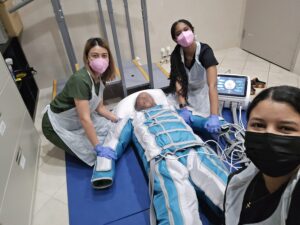
Is Pressotherapy Considered Safe?
Pressotherapy is generally regarded as safe when clinically indicated and correctly administered. However, it may not be suitable for all individuals.
Medical assessment is particularly important in individuals with suspected or deep-vein thrombosis, severe heart failure or clinically significant peripheral arterial disease. Individuals with concerns or medical conditions and are uncertain whether pressotherapy is suitable for them should consult a healthcare professional before undergoing treatment.
References
Gabriel, A., Chan, V., Caldarella, M., Wayne, T., & O’Rorke, E. (2023). Cellulite: Current understanding and treatment. Aesthetic Surgery Journal Open Forum, 5. https://doi.org/10.1093/asjof/ojad050
Hoffman, M. D., Badowski, N., Chin, J., & Stuempfle, K. J. (2016). A randomized controlled trial of massage and pneumatic compression for ultramarathon recovery. Journal of Orthopaedic Sports Physical Therapy, 46(5), 320-326. https://doi.org/10.2519/jospt.2016.6455
Hou, S., Li, Y., Lu, W., Zhang, X., Luo, H., Qiu, J., & Lu, Z. (2024). Efficacy of intermittent pneumatic compression on breast cancer-related upper limb lymphedema: A systematic review and meta-analysis in clinical studies. Gland Surgery, 13(8), 1358-1369. https://doi.org/10.21037/gs-24-123
Kim, N. Y., Ryu, S., & Kim, Y. H. (2024). Effects of intermittent pneumatic compression devices interventions to prevent deep vein thrombosis in surgical patients: A systematic review and meta-analysis of randomized controlled trials. PLoS One, 19(7), e0307602. https://doi.org/10.1371/journal.pone.0307602
Maia, F., Nakamura, F. Y., Sarmento, H., Marcelino, R., & Ribeiro, J. (2024). Effects of lower-limb intermittent pneumatic compression on sports recovery: A systematic review and meta-analysis. Biology of Sport, 41(4), 263-275. https://doi.org/10.5114/biolsport.2024.133665,
Ptaszek, B., Wójciak, A., Żak, A., & Podsiadło, S. (2024). The effect of lower limb pressotherapy treatment on selected rheological and biochemical indices of blood in young, healthy women. Journal of Clinical Medicine, 13(19), 5743. https://doi.org/10.3390/jcm13195743
Schwahn-Schreiber, C., Breu, F. X., Rabe, E., Buschmann, I., Döller, W., Lulay, G. R., Miller, A., Valesky, E., & Reich-Schupke, S. (2018). S1 guideline on intermittent pneumatic compression (IPC). Der Hautarzt, 69(8), 662-673. https://doi.org/10.1007/s00105-018-4219-1
Waller, T., Caine, M., & Morris, R. (2006). Intermittent pneumatic compression technology for sports recovery. The Engineering of Sport 6. Springer. (pp. 391–396).
https://doi.org/10.1007/978-0-387-45951-6_70